

Translation Requirements Compared: Australia, Canada and the United Kingdom in 2026
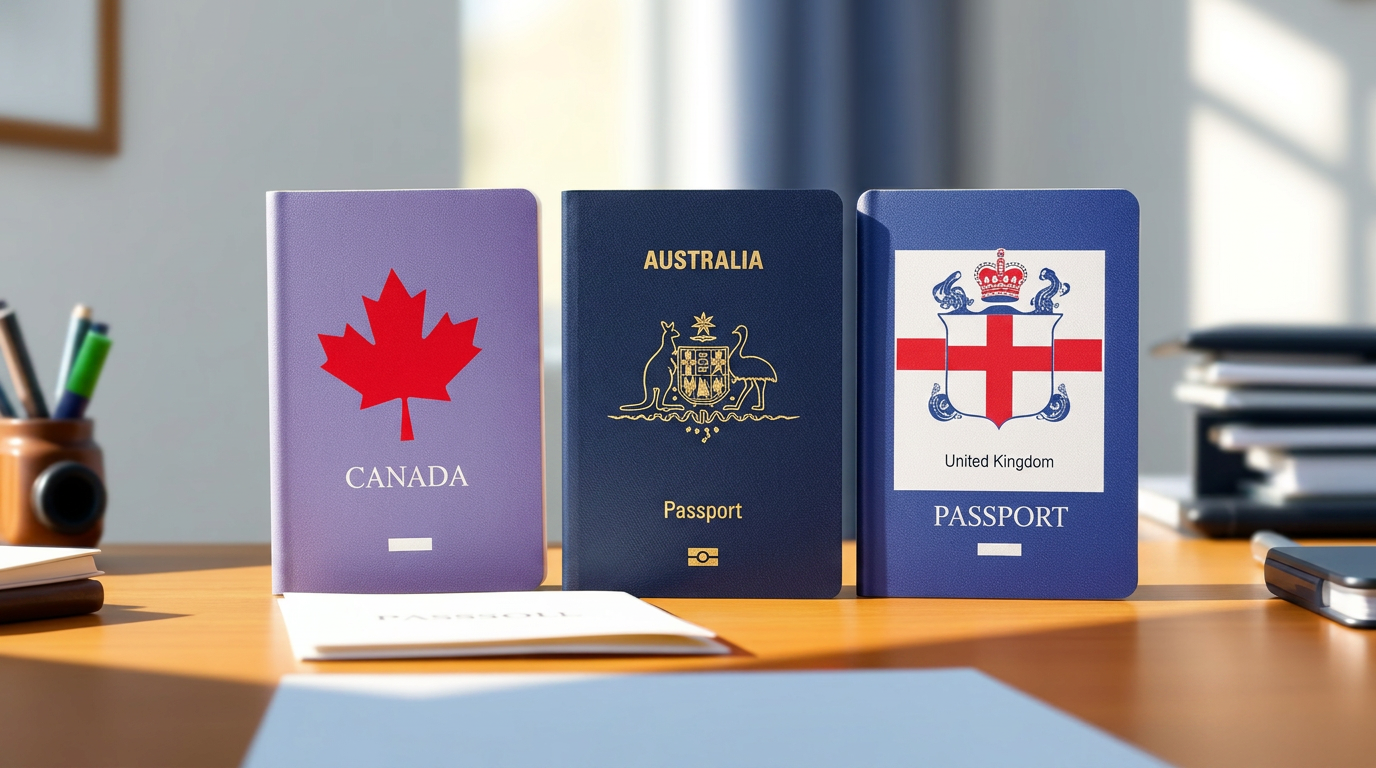
Picture a single year in the life of one Melbourne resident. A Canadian study permit in March, a UK ancestry visa in July, an Australian citizenship file in November. Three countries, three sets of paperwork, one stack of certificates that needs translation into English the right way for each desk. The same birth certificate can be perfectly acceptable in one capital and quietly rejected in another. That happens because the rulebook behind certified translation services Australia operates very differently from the rulebooks in Ottawa and London. This guide pulls the three systems onto one page so you can plan the work once and avoid the rework later.
The Three Systems at a Glance
Each country leans on a different idea of who counts as a trusted translator. Australia runs everything through a single national body. Canada delegates authority to provincial associations and accepts sworn affidavits where a member is unavailable. The United Kingdom skips the central register entirely and lets professional bodies and solicitors carry the trust.
| Country | Governing body | Translator title | Stamp required | Digital accepted |
|---|---|---|---|---|
| Australia | NAATI | Certified Practitioner | Yes, digital seal | Widely accepted |
| Canada | ATIO, OTTIAQ, CTTIC | Certified Translator | Provincial seal or affidavit | Accepted with conditions |
| United Kingdom | ITI, CIOL, solicitor | Qualified Member or sworn signatory | Company letterhead and signature | Accepted in most cases |
Australia: One National Authority Sets the Bar
Australia is unusual in the English speaking world. The National Accreditation Authority for Translators and Interpreters issues a single credential that every major regulator recognises. A Certified Practitioner Number sits on every accepted translation, and the receiving officer can look it up on the public NAATI directory in seconds. Home Affairs, VicRoads, state birth death and marriage offices, universities and skills assessors all align on the same standard, which keeps the lodging process predictable. Standard text document pricing across the industry sits at $44.95 + Service Fee for most extracts, with full translations running higher when layout and formatting are part of the brief.
Canada: A Provincial Patchwork With a Sworn Backup
Canada divides translator certification along provincial lines. Ontario relies on ATIO, Quebec relies on OTTIAQ, and most other provinces sit under the national CTTIC umbrella. Each body runs its own exam and membership register. Immigration, Refugees and Citizenship Canada accepts a translation by a certified member or a translation by a non member that is paired with a sworn affidavit. Officers compare the credential on the page against the provincial directory and treat the affidavit option as a fallback when the language pair is rare. The official IRCC guidance on translations sits on the Government of Canada translation requirements page and applicants should read it before booking a translator in their province. Court filings, contracts and statutory documents tend to need the sworn route, which is one reason many migration practitioners route this work through specialist providers of legal document translation services who understand affidavit formatting across jurisdictions.
United Kingdom: Self Certification With Professional Standing
The United Kingdom has no government register for translators. Trust sits with the professional bodies and with solicitors. A translation company self certifies on company letterhead, prints the translator name and credentials, and signs a short statement of accuracy. The Home Office, courts and universities accept this format when the signatory is a qualified member of the Institute of Translation and Interpreting or the Chartered Institute of Linguists. Court documents often require an additional sworn affidavit witnessed by a solicitor or notary public. The exact wording the Home Office expects on the certification block appears on the UK government certifying a document page, which is worth reading before commissioning any UK translation.
Side by Side: What Each Country Asks For
The matrix below pulls the most common personal documents into one view. Use it as a first pass before talking to a translator about a specific submission.
| Document | Australia | Canada | United Kingdom |
|---|---|---|---|
| Birth certificate | NAATI certified | Certified member or affidavit | Company certified, ITI or CIOL |
| Marriage certificate | NAATI certified | Certified member preferred | Company certified |
| Academic transcript | NAATI certified | Certified by ATIO or OTTIAQ | UK ENIC accepts certified |
| Police clearance | NAATI certified | Certified or sworn | Company certified |
| Driver licence | NAATI extract | Province specific rules | DVLA accepts certified |
Cost and Timeline Reality Check
Prices vary by document type, language pair and turnaround. The figures below show the rough shape of the market in late 2026 and should be treated as indicative rather than binding quotes.
| Country | Typical price per document | Standard turnaround |
|---|---|---|
| Australia | $44.95 + Service Fee for extracts | From 1 hour to 2 business days |
| Canada | CAD 50 to CAD 120 | 3 to 7 business days |
| United Kingdom | GBP 35 to GBP 90 | 2 to 5 business days |
Numbers worth knowing
- NAATI lists more than 13,000 certified practitioners across all language directions in Australia.
- ATIO and OTTIAQ together hold over 4,500 certified translator members across Ontario and Quebec.
- ITI and CIOL together count roughly 14,000 qualified translator and linguist members in the United Kingdom.
Common Pitfalls Across All Three Systems
The same handful of mistakes appears in rejection letters from all three countries. Catching these before the file leaves the desk saves weeks of waiting.
- Submitting a notarised photocopy of the source instead of a translation of it.
- Asking a bilingual friend or family member to translate, which fails the conflict of interest test in every system.
- Confusing certified with sworn, especially on Canadian court files where the affidavit is the point.
- Missing the original document scan that the translator must reference inside the certification statement.
The line between certified and standard work trips up many applicants who are looking at the cheapest option. Readers who want a fuller breakdown will find it inside the difference between certified and standard translation guide, which sits alongside this comparison in the resource library.
Which Country Has the Strictest Rules
Strictness is in the eye of the regulator. Australia is the strictest by structure. A single national body, a public register and a uniform credential leave very little room for interpretation. Canada is the strictest by ceremony. The sworn affidavit option adds a layer of legal formality that the other two countries reserve for court work. The United Kingdom looks the loosest on paper because there is no central register, yet Home Office officers quietly enforce a reputation check on the certifying company that rivals the rigour of any government list. Three different routes to the same outcome.
Planning tip
When the same document needs to travel to two or three countries, commission the Australian NAATI version first, then ask the translator or a Canadian colleague to attach a sworn affidavit for the Canadian leg. A UK letterhead certification can be added in parallel for the third copy. One source translation, three certification wrappers, far less duplication.
The Bottom Line
Three countries, three philosophies, one practical lesson. Match the translator credential to the desk that will read the file. A NAATI practitioner inside Australia, a certified provincial member or sworn affidavit inside Canada, and a qualified ITI or CIOL signatory inside the United Kingdom. Get those three pairings right and the paperwork stops being the slowest part of the journey.
Quick takeaway
- Australia runs on NAATI, a single national register that every regulator accepts.
- Canada accepts provincial members or sworn affidavits, depending on the document type.
- The United Kingdom relies on professional bodies and solicitor witnesses rather than a central list.
- Always match the translator credential to the country receiving the file.
About the Author
Priya Anand — Priya Anand writes for Ethnic Translations on cross border documentation, covering the certified translation systems applicants meet across Commonwealth migration pathways.